

The Famous Peri 5, No. 2: Omega-3
The supplement your brain has been quietly asking for, possibly for years.
I am sure you have come across one of those memes on Instagram making fun of perimenopausal women forgetting things or mixing up words. I can totally relate. I remember getting out of the subway, standing in the middle of Union Square, wondering where I was going. It took me a couple of minutes to remember, and I found it quite scary, questioning whether these were the first steps toward dementia. I also tend to mix up words or lose them entirely mid-sentence. To solve the mystery: I was heading to Fishs Eddy because I was on a mission to buy three cute pigeon art pieces.
They have these really cute pictures of pigeons, and every pigeon represents a New York neighbourhood. I always wanted to buy them, and that day I decided to hop on the Q train and get three of them. Aren't they adorable?

The irony is not lost on me. Pigeons are famous for their flawless navigation. Homing pigeons can fly hundreds of miles and find their way home without hesitation. I could not remember which stop to get off at. Which, now that I think about it, is exactly why we are talking about omega-3.

Brain fog is one of the strangest things perimenopause does to you. It is not dramatic enough to explain to someone who has not felt it. You are not confused exactly. You are just... slower. You walk into a room and forget why. You read the same sentence three times. You start saying a word and lose it mid-sentence, which is particularly fun when you are in a meeting and everyone is looking at you. Or your kids look at you like you have lost your mind.
I assumed this was stress. Then I assumed it was poor sleep. And both of those things contributed. But the part nobody told me was that estrogen actively protects brain function, and as it declines, the brain becomes more vulnerable to inflammation and oxidative stress. One of the most direct ways to support your brain during that shift is omega-3 fatty acids. Specifically EPA and DHA. And most of us are not getting nearly enough.
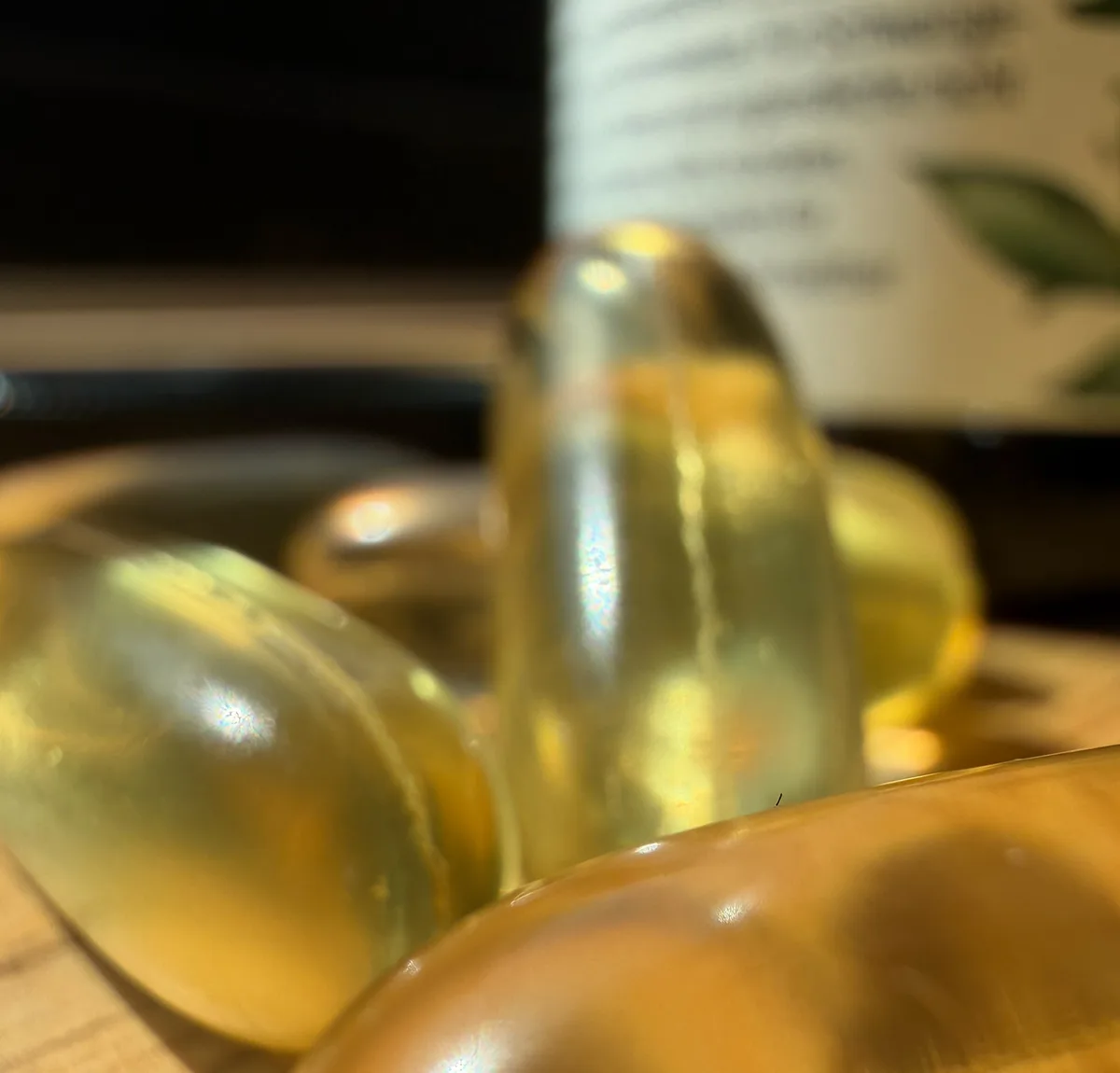
What are omega-3 fatty acids?
Omega-3s are a family of fats. The ones that matter most for perimenopause are EPA (eicosapentaenoic acid) and DHA (docosahexaenoic acid). These are found in fatty fish, and in algae, which is where the fish get them from in the first place.
DHA makes up roughly 25 percent of the fat in your brain's cerebral cortex. It is a structural component of brain cell membranes. Not a nice-to-have. A fundamental building block. EPA, meanwhile, has the strongest evidence for mood and inflammation. The two work together, and you want both.
Plant-based omega-3s like flaxseed contain ALA, which your body converts to EPA and DHA very inefficiently. If you do not eat fish, algae-based omega-3 supplements give you DHA and EPA directly, no conversion required. I am a vegetarian, so I looked for plant-based omega-3s and found good alternatives to those containing fish oil.
Why perimenopause makes you need it more
As estrogen declines, the brain loses some of its natural anti-inflammatory protection. Omega-3s, particularly EPA, have well-documented anti-inflammatory effects that can help fill that gap. DHA supports the structural integrity of brain cells, which matters more as the brain becomes more vulnerable to oxidative stress.
There is also the mood angle. Low omega-3 intake is consistently associated with depression and anxiety, both of which rise significantly during perimenopause. Several studies have found that EPA supplementation improves mood outcomes in ways that are clinically meaningful.
And then there are hot flashes. A randomized controlled trial published in Menopause found that omega-3 supplementation reduced hot flash frequency by about 55 percent over eight weeks. That figure does not apply to every woman, and results vary considerably. But it is not nothing, and it is one more reason to take the question seriously.
Finally: joints. If your symptoms include new joint pain or stiffness, you are in large company. Omega-3s have solid anti-inflammatory evidence in that area too. Not a cure, but a meaningful support.
What the evidence says
The research on omega-3s and brain health is among the strongest in supplement science. Dozens of well-designed studies have looked at DHA and cognitive function, EPA and mood, and the combination for inflammation. The American Heart Association recommends omega-3s for cardiovascular health, which becomes increasingly relevant as estrogen loss raises cardiovascular risk after menopause.
This is not a niche supplement with thin evidence. It has been studied more than most.
How to take it
Form: Look for a supplement that lists EPA and DHA separately with gram amounts. Triglyceride form absorbs better than ethyl ester form. Algae oil is a clean alternative to fish oil and works just as well.
Dose: Most studies use 1 to 3 grams of combined EPA and DHA per day. For mood and inflammation, EPA-dominant formulas (higher EPA than DHA) tend to perform best. For brain and cognitive support, you want meaningful DHA.
When: With a meal that contains fat. Omega-3s are fat-soluble, and absorption is significantly better with food.
Quality: Look for third-party testing and IFOS certification if you are buying fish oil. Oxidized fish oil is worse than nothing. Smell it. Fresh omega-3 oil should not smell strongly of fish.
What to expect: Subtle. Omega-3s work over weeks to months, not overnight. Do not expect a dramatic moment where you notice a difference. Expect to look back in two months and realize things feel somewhat clearer.
If you are on blood thinners, have a bleeding disorder, or are preparing for surgery, talk to your doctor before supplementing. Omega-3s can affect clotting at higher doses.

Me after getting lost in Union Square. Emergency iced coffee was the only logical next step.
My honest take
I take omega-3s every single day with breakfast. It is one of the few supplements that I never question. The evidence is too strong and the downside is basically zero if you pick a clean product.
Did it fix my brain fog? No. Nothing fixed it entirely. But it is part of why I feel as functional as I do on the days when sleep has not been great or stress has been high. It is a quiet, consistent support. Your brain is under enough pressure right now. Give it what it needs.
Up next in The Famous Peri 5: D3+K2, and why these two work best when they travel together.