

Hello, Frozen Shoulder. It's time to warm these muscles up.
I thought about writing this post for a while before deciding to go for it. It feels a little "Granny Influencer" to complain about a stiff shoulder, but honestly, who cares. I'm not alone in this. Frozen shoulder affects around 2 to 5% of people overall, but women are about twice as likely as men to get it, and most cases hit between ages 40 and 60, which lines up almost perfectly with the perimenopause years. So no, it's not just you and it's not just me.
A quick note before we dive in: this post is just my personal experience, not medical advice. If you're dealing with shoulder pain, please consult a doctor or physical therapist rather than relying on what worked for me.
What Actually Happened
A few weeks ago I felt this horrible pain in my left shoulder. Honestly, I can't even pin down exactly where it's coming from. It's more in the upper arm, and it feels like someone randomly stabs a knife into it. Could be a new Halloween perimenopause feature, just to make this time of year extra special. A nice little upgrade to the regular perimenopause experience.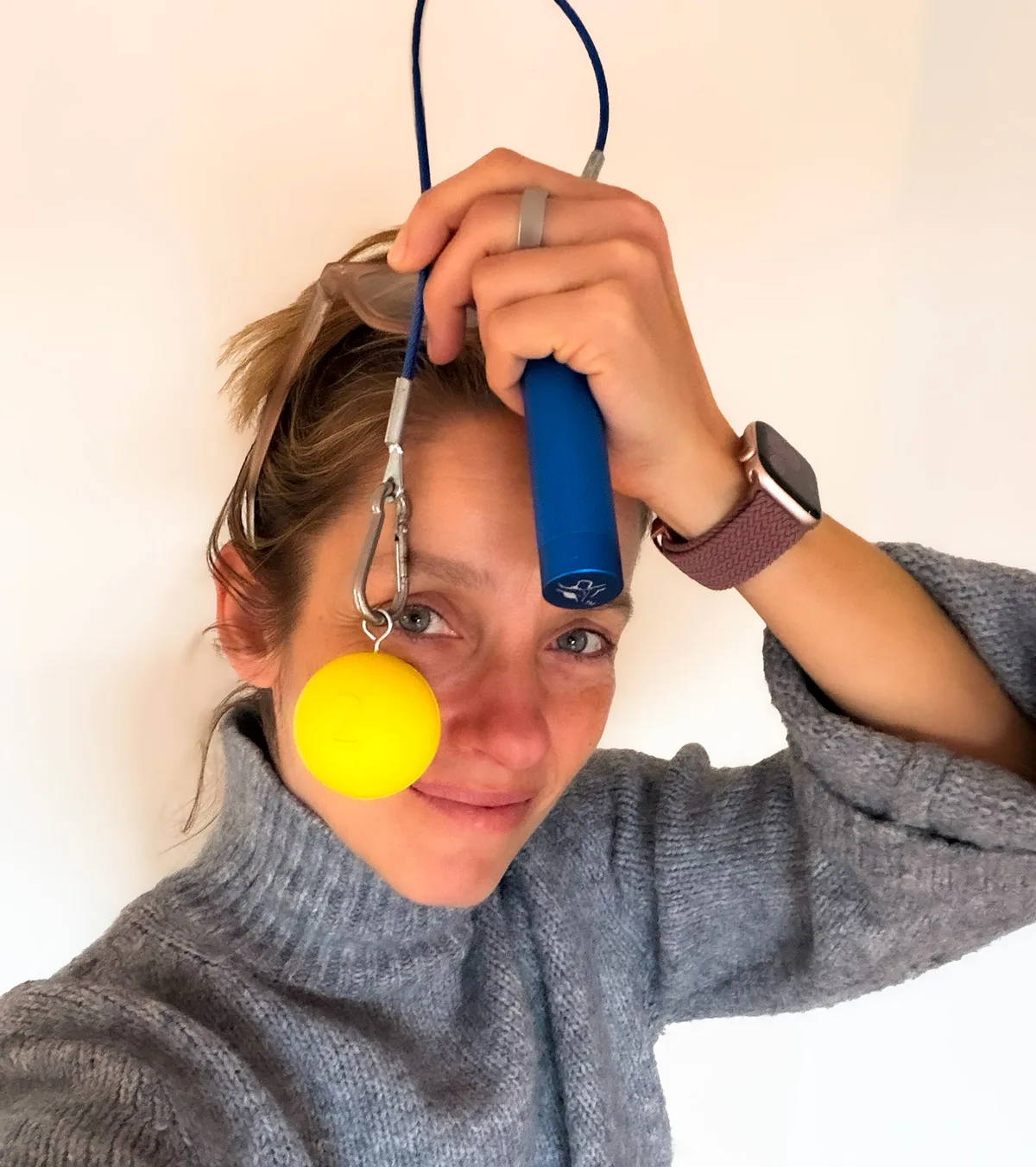
## What Is a Frozen Shoulder, Anyway?
Frozen shoulder (adhesive capsulitis, if you want the medical term) happens when the tissue around the shoulder joint thickens and tightens, which limits movement and causes pain, sometimes for months. Researchers think the hormone shifts of perimenopause, especially dropping estrogen, play a role, since estrogen helps keep connective tissue flexible. Add in general inflammation changes during this life stage, and shoulders, along with other joints, can take the hit.
If you want to go deeper on this, Dr. Mary Claire Haver talked about frozen shoulder on her podcast, including how often women's joint pain gets brushed off instead of taken seriously. There's also a great episode with orthopedic surgeon Dr. Jocelyn Wittstein that's entirely focused on menopause and frozen shoulder, if you want to hear it straight from a specialist.
As always, if shoulder pain is severe, sudden, or doesn't improve, it's worth getting checked out by a doctor or physical therapist rather than guessing. The Menopause Society is also a solid resource if you want to read more from a clinical source.
What I'm Trying
I came across a tool called the Shoulder Reliever. It's a two-part system: a daytime weighted pendulum device and a nighttime support sleeve. I'm going to give it a go and keep you posted on how it works out.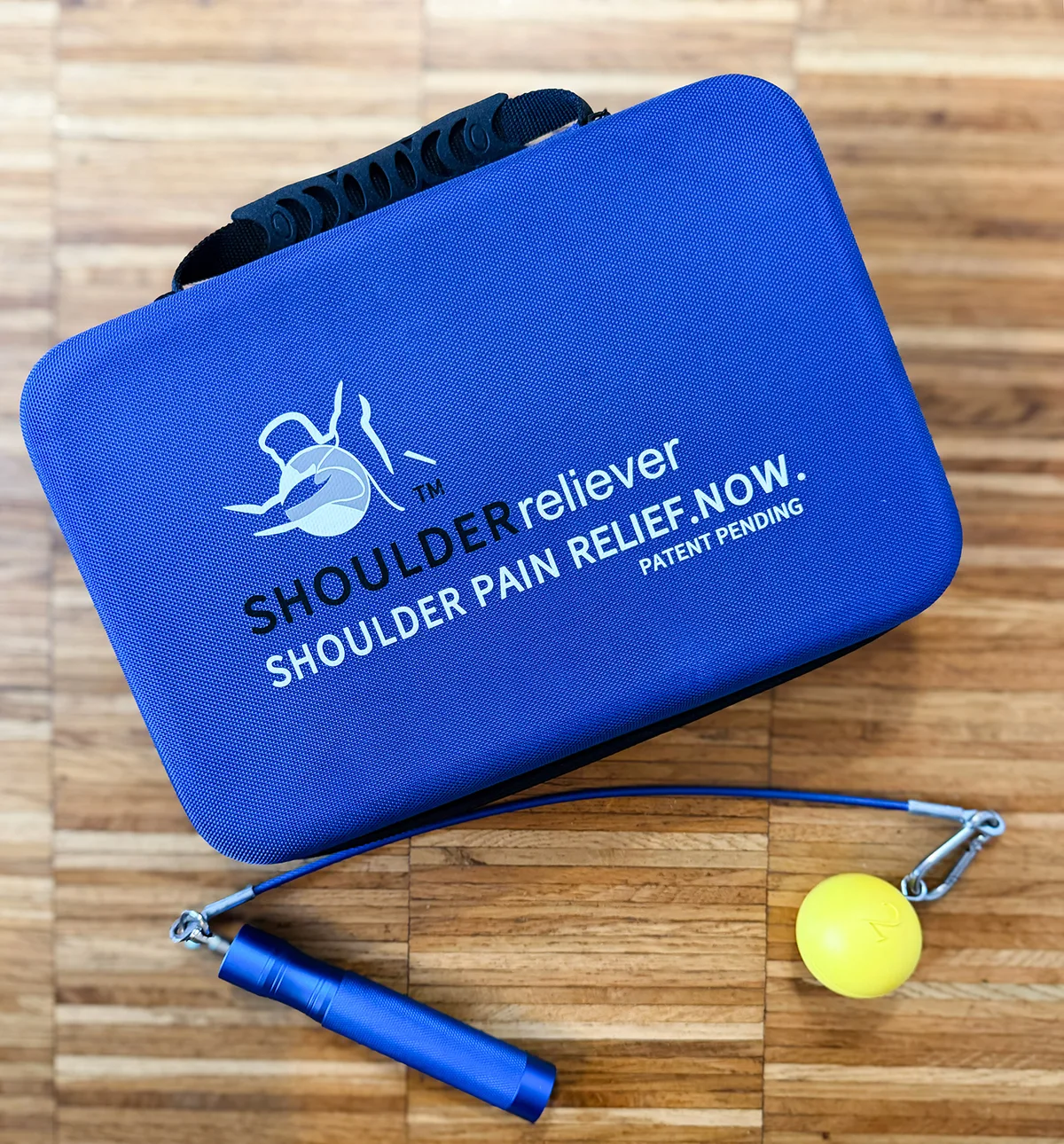
I put it on my nightstand the other day, and every time I walk past it I laugh, because it honestly looks like it belongs in a very different kind of drawer, not a shoulder rehab kit. Things really do change after 45, don't they?
How the Tool Works
It's built around a three-step cycle. During the day, you use a weighted pendulum device for about five minutes to gently decompress the joint and ease pressure on inflamed tendons, while also starting to rebuild the deep rotator-cuff muscles. At night, a support sleeve keeps the shoulder properly aligned while you sleep, so you're not undoing the day's progress by re-injuring it in your sleep. The idea is gentle, controlled movement and support rather than forcing the joint, which fits with how frozen shoulder recovery usually works: slow and steady beats aggressive stretching.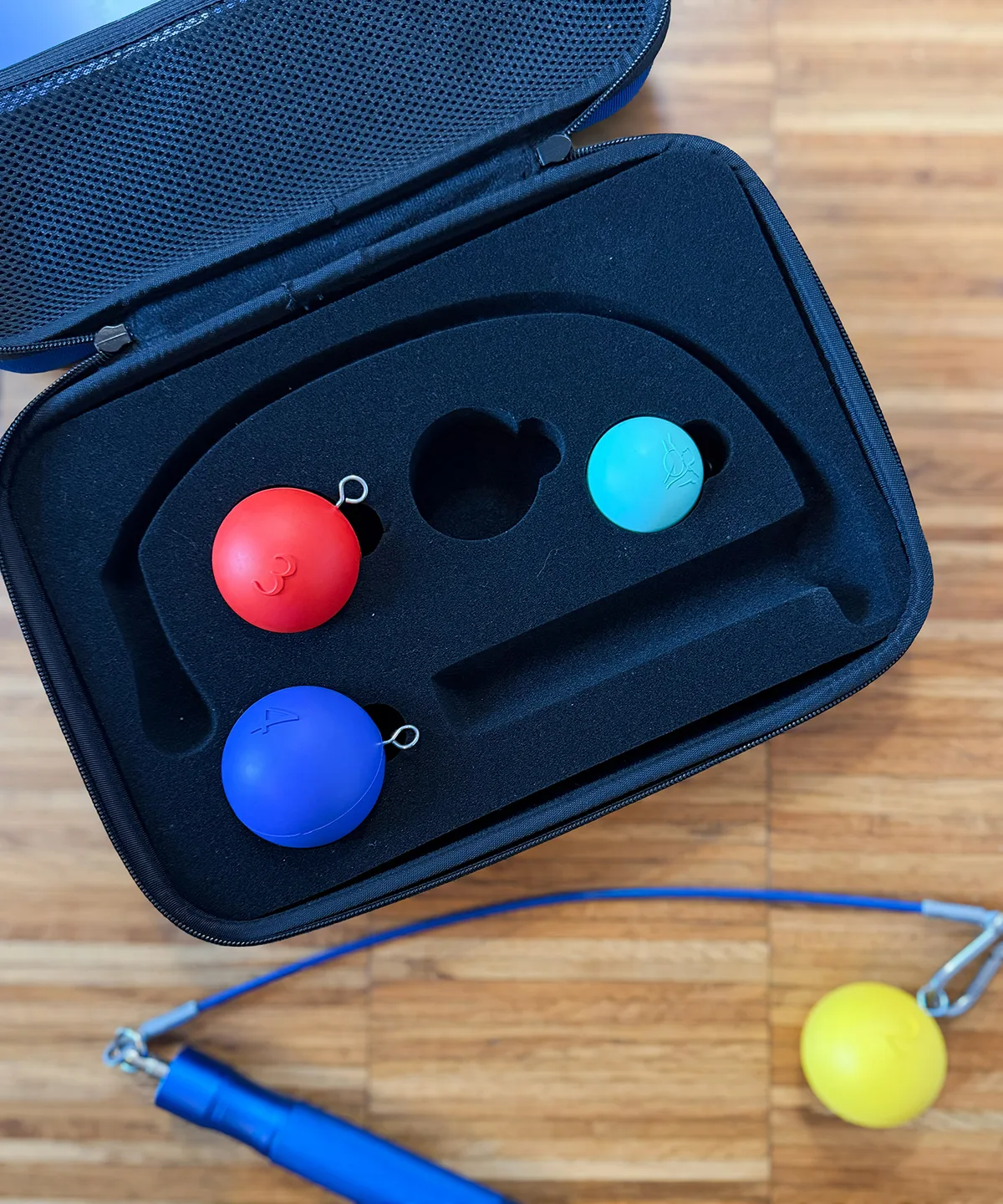
## My Halloween Costume Idea
Honestly, at this point I'm half tempted to go as "Perimenopause" for Halloween this year. Picture it: me, dragging my Shoulder Reliever pendulum behind me like a ball and chain, a box of omega-3s in one pocket and my creatine drink in the other, estrogen patches visibly stuck on wherever they'll fit, and a handheld fan going full blast because who knows what temperature I'll be by 8pm. I'd probably throw in a sleep mask pushed up on my forehead (for the 3am wake-ups), a jumbo bottle of magnesium, and a sticky note on my shirt that just says "where are my keys." Scary costume, 100% accurate.
I Want to Hear From You
Have you experienced frozen shoulder pain? What helped you, and what has your experience been like? Let me know in the comments, I'd love to hear your story.